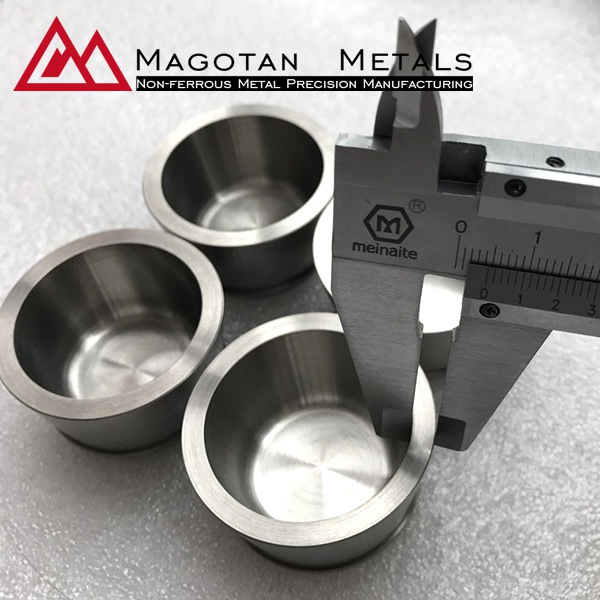
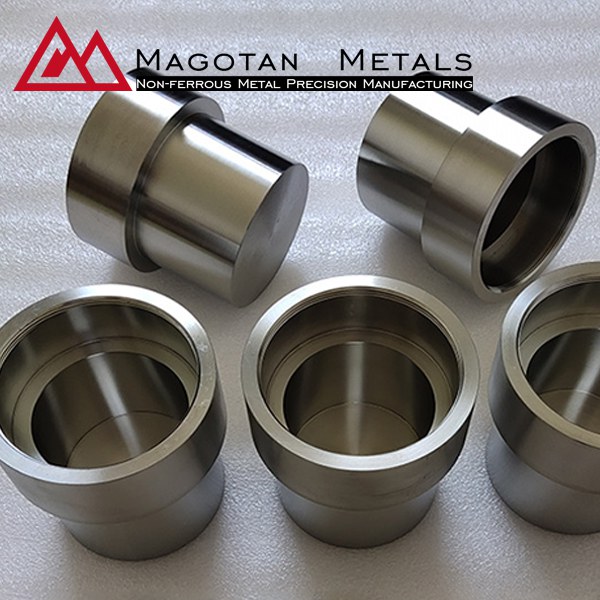
In industrial high-temperature processes (metal smelting, semiconductor manufacturing, advanced material research), the choice of crucible materials is crucial for efficiency, product purity, and safety. Tungsten, molybdenum, tantalum, and nickel are reliable options, each with unique properties that meet specific needs. Understanding their advantages and matching them with process requirements can optimize performance.
Key materials for high-temperature crucibles: performance advantages and application fields
Few metals can withstand the extreme heat, thermal stress, and chemical exposure encountered in high-temperature operations. Tungsten, molybdenum, tantalum, and nickel stand out as key materials in industry due to their remarkable durability. Below is a detailed introduction to their core properties and typical applications:
Tungsten: The Ultimate Heat-Resistant Choice
Tungsten is renowned for its unparalleled melting point (>3400°C), making it highly suitable for extreme high-temperature applications. Under intense thermal stress, tungsten maintains structural integrity, thereby reducing the risk of long-term failure. Although tungsten appears relatively fragile at room temperature, its high-temperature strength makes it an ideal material for melting refractory metals and conducting research on high-temperature alloys.
Molybdenum: Equilibrium performance at medium and high temperatures
Molybdenum strikes a balance between heat resistance, strength, and cost-effectiveness. With a melting point of approximately 2620°C, it excels in medium and high-temperature processes and is less expensive than tungsten/tantalum. Furthermore, molybdenum boasts excellent thermal and electrical conductivity, making it suitable for glass melting, vacuum sintering, and electron beam melting. Note: Molybdenum oxidizes in high-temperature air, so it should be used under vacuum or inert gas protection.
Tantalum: excellent corrosion resistance and anti-pollution properties
The core advantage of tantalum lies in its resistance to chemical reactions and contamination. It is inert to most acids and reactive substances, making it crucial for high-purity processes such as semiconductor manufacturing, pharmaceuticals, and reactive metal processing. Although its melting point (about 2900°C) is lower than that of tungsten, its corrosion resistance is irreplaceable in applications sensitive to contamination.
Nickel: Cost-effective under specific high-temperature conditions
For high-temperature processes that do not require extreme heat resistance, nickel is an economical and efficient choice. With a melting point of approximately 1455°C, it is suitable for non-ferrous metal melting, heat treatment, and chemical processing. Nickel’s ductility makes it easy to process into complex shapes, but its lower heat resistance limits its application in ultra-high temperature operations.
Key factors to consider when selecting high-temperature crucible materials
Selecting the appropriate crucible material involves not only considering the melting point, but also evaluating process conditions and objectives. The key selection factors are as follows:
Maximum process temperature
Fundamentally, the maximum process temperature should be considered. >2600°C: tungsten/tantalum only. 1500–2600°C: molybdenum. <1500°C: nickel. Using materials beyond their temperature range can lead to premature failure.
Material compatibility
Verify the compatibility of crucible materials with the processed substances. Tantalum’s inertness makes it suitable for acidic/reactive materials, while molybdenum may react with oxygen at high temperatures. To avoid contamination, tantalum must be used when melting reactive metals (titanium, zirconium).
Process atmosphere
The operating environment (vacuum, inert gas, air) has a significant impact on material properties. Molybdenum/tungsten oxidizes rapidly in high-temperature air, thus requiring vacuum/inert gas protection. Nickel has good oxidation resistance and is suitable for processing in open atmospheric environments; tantalum performs well in most environments, especially in vacuum.
Purity requirement
Purity requirements are key to material selection. The semiconductor and pharmaceutical industries need to prevent trace contamination, and tantalum and high-purity tungsten are the best choices. For applications with lower requirements, nickel and molybdenum can provide sufficient purity at a lower cost.
Balance between budget and cost-effectiveness
The cost varies significantly: tantalum/tungsten are the most expensive, followed by molybdenum, while nickel is the most economical. Strike a balance between performance requirements and cost – if nickel can meet the requirements, there is no need to use tantalum.
Design complexity
The complexity of crucible shapes can affect material selection. Ductile nickel is easily processed into complex designs (such as customized cavities, conical shapes). However, brittle tungsten/molybdenum requires specialized processing techniques to form complex shapes, which increases costs and delivery time.
Selecting high-temperature crucible materials is a meticulous process that requires a deep understanding of material properties and process conditions. Prioritizing temperature, compatibility, and purity ensures reliable and high-quality material performance, which is crucial for modern industrial operations.
| Type | Advantage | Disadvantage | Use |
| Tungsten (W) Crucibles | Highest melting point (3422°C), ultimate for extreme temperatures, excellent purity and strength. | Very hard to machine, oxidizes in air at high temps (needs vacuum/inert gas). | Sapphire growth, rare earth melting, ultra-high purity semiconductor work. |
| Molybdenum (Mo) Crucibles | High melting point (2623°C), good balance of properties, more cost-effective and machinable than tungsten. | Oxidizes in air at high temps (needs vacuum/inert gas). | Vacuum furnaces, general metallurgy, electronics/optics. |
| Tantalum (Ta) Crucibles | High melting point (2996°C), exceptional corrosion resistance to acids/alkalis, very ductile and easy to machine. | Most expensive, can absorb hydrogen and become brittle. | Highly corrosive chemical processing, specialty material melting, electron beam sources. |
| Nickel (Ni) Crucibles | Good melting point (1455°C) for moderate temps, excellent resistance to alkalis, ductile and easy to fabricate, more affordable. | Lower melting point than refractory metals, susceptible to sulfur and certain acids. | Alkaline fusions, specific chemical syntheses at moderate temperatures. |