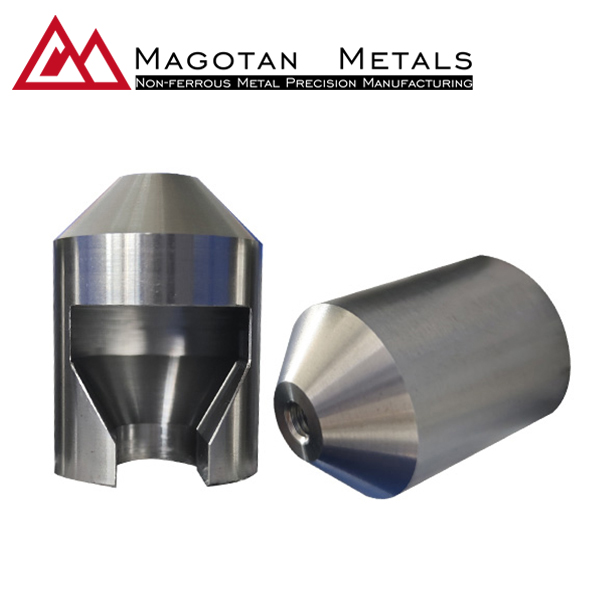
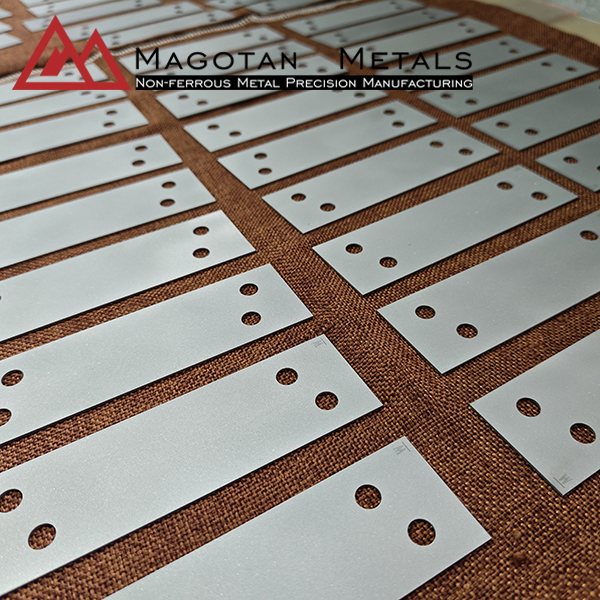
In the semiconductor manufacturing process, ion implantation technology plays a pivotal role in precise doping of semiconductor wafers, which directly affects the performance and functionality of chips. As the core of this technology, the ion implantation system relies on a series of highly specialized components to complete the entire process of ion generation, acceleration, shaping, and directional implantation. These components, known as ion implanter components, need to operate stably under extreme conditions such as high vacuum, intense electric fields, and energetic ion bombardment, while maintaining ultra-high purity to avoid contaminating the fragile silicon wafers. Below is a detailed introduction to the key sections and their core components of a typical ion implanter.
Key Sections and Core Components of Ion Implanters
A standard ion implanter is composed of five major key sections, each equipped with a set of critical components that cooperate closely to ensure the accuracy and efficiency of the ion implantation process. Each section undertakes unique functions, and the performance of its components directly determines the overall process level of the ion implanter.
Ion Source: The Origin of Ion Generation
The ion source is the starting point of the entire ion implantation process, responsible for generating the required ions. Its core function is to ionize the incoming gas or solid source material—converting neutral atoms or molecules into positively charged ions. To achieve efficient ionization, the ion source needs to create a high-temperature, high-pressure plasma environment. The components within the ion source are typically made of high-temperature and corrosion-resistant special materials to withstand the harsh conditions of plasma erosion. The stability and ionization efficiency of the ion source directly affect the intensity and stability of the subsequent ion beam, which is a fundamental guarantee for the quality of the implantation process.
Mass Analyzer (Mass Spectrometer): The “Filter” for Target Ions
After ions are generated by the ion source, they often contain a variety of ion species with different mass-to-charge ratios. The mass analyzer, also known as a mass spectrometer, undertakes the critical function of filtering ions—it screens out ions with the desired mass-to-charge ratio through the principle of electromagnetic deflection, ensuring that only the target ion species can pass through and reach the semiconductor wafer. This filtering process is crucial for the precision of the doping process, as impure ion species will cause deviations in the electrical properties of the wafer. The core components of the mass analyzer include electromagnetic coils, deflection chambers, and detection sensors, which need to have extremely high precision to achieve accurate ion screening.
Beamline/Acceleration Column: Accelerating and Focusing the Ion Beam
The beamline and acceleration column are responsible for accelerating and focusing the filtered target ions. The acceleration column applies a strong electric field to the ion beam, enabling the ions to obtain sufficient kinetic energy—this kinetic energy determines the depth of ion implantation into the wafer. The beamline, on the other hand, is equipped with a series of focusing lenses (such as electrostatic lenses or magnetic lenses) that converge the scattered ion beam into a high-density, high-collimation beam. The components in this section need to withstand intense electric field forces and ion bombardment, so they are usually made of high-strength, high-purity conductive materials. The uniformity of acceleration and the quality of beam focusing directly affect the uniformity of ion distribution on the wafer surface.
Scanning System: Realizing Full-Wafer Ion Coverage
The scanning system is responsible for deflecting the accelerated and focused ion beam, making it scan uniformly across the entire surface of the semiconductor wafer. This ensures that ions are implanted evenly into every area of the wafer, avoiding local over-implantation or under-implantation. There are two main types of scanning methods: beam scanning and wafer scanning. The core components of the scanning system include deflection electrodes, scanning coils, and precision drive mechanisms. These components need to have high response speed and positioning accuracy to meet the requirements of high-speed and high-precision implantation of large-size wafers. The stability of the scanning system is a key factor in ensuring the consistency of wafer performance across the entire batch.
End Station/Process Chamber: The Final Stage of Ion Implantation
The end station, also known as the process chamber, is the place where the semiconductor wafer is held and the ion implantation process is finally completed. This section needs to maintain an ultra-high vacuum environment to avoid collisions between ions and air molecules, which would affect the direction and energy of the ion beam. The core components of the end station include wafer chucks (used to fix and cool the wafer), vacuum pumps, and gas purification systems. The wafer chuck also needs to have precise temperature control capabilities to prevent thermal damage to the wafer during the implantation process. In addition, the end station is usually equipped with in-situ detection components to monitor the implantation process in real time and ensure process stability.
Summary of Ion Implanter Components
Ion implanter components are a collection of high-precision, high-reliability specialized parts that work together in a coordinated manner to complete the complex ion implantation process. From the generation of ions in the ion source to the final implantation in the end station, each section and its components undertake irreplaceable functions. Most of these components are custom-machined using specialized materials to adapt to extreme working conditions and ultra-high purity requirements. With the continuous development of the semiconductor industry towards smaller process nodes and higher chip integration, the requirements for the precision, stability, and reliability of ion implanter components are also constantly improving, driving the continuous innovation and upgrading of related component technologies.