Molybdenum components are highly sought-after in high-performance industrial scenarios due to their exceptional material properties. Below is a detailed breakdown of their advantages and industry applications, optimized for search visibility.
Key Advantages of Molybdenum Components
Outstanding High-Temperature Resistance
Molybdenum boasts an ultra-high melting point of 2,623°C, retaining structural stability and mechanical strength even in extreme high-temperature environments (up to 1,900°C in service). It outperforms most metals in thermal shock resistance, making it ideal for applications exposed to rapid temperature fluctuations.
Excellent Mechanical Strength & Wear Resistance
With high tensile strength and hardness (especially after alloying or heat treatment), molybdenum components exhibit superior wear resistance and load-bearing capacity. They maintain dimensional stability under heavy loads, reducing maintenance frequency and extending service life.
Superior Corrosion & Oxidation Resistance
Molybdenum resists corrosion from most acids (excluding hydrofluoric acid), alkalis, and molten salts. When coated with protective layers (e.g., silicon carbide, aluminum oxide), it demonstrates excellent oxidation resistance at high temperatures, suitable for harsh chemical environments.
Exceptional Thermal & Electrical Conductivity
Molybdenum’s thermal conductivity is 5 times that of stainless steel, and its electrical conductivity is comparable to copper (≈35% IACS). This enables efficient heat dissipation and stable current transmission, critical for electronic and thermal management applications.
Low Thermal Expansion & Dimensional Stability
With a low coefficient of thermal expansion (1/3 that of steel), molybdenum components undergo minimal deformation under temperature changes. This ensures precise dimensional accuracy in high-precision manufacturing and assembly processes.
Key Industry Applications of Molybdenum Components
Aerospace & Defense
Engine Components: Turbine blades, combustion chamber liners, and nozzle throats for jet engines and rocket motors, leveraging high-temperature resistance and structural integrity.
Satellite & Spacecraft Parts: Thermal shields, structural supports, and electrical contacts, benefiting from low thermal expansion and corrosion resistance in space environments.
Electronics & Semiconductor
Semiconductor Manufacturing: Wafer carriers, deposition targets, and heating elements for CVD (Chemical Vapor Deposition) and PVD (Physical Vapor Deposition) processes, due to high purity (up to 99.95%) and thermal stability.
Electronic Devices: High-power resistor cores, electrical contacts, and heat sinks for power electronics (e.g., IGBT modules) and vacuum tubes, utilizing excellent electrical conductivity and heat dissipation.
Energy & Power Generation
Nuclear Energy: Fuel rod cladding, control rods, and reactor core structural components, resistant to high temperatures, radiation, and corrosive coolants (e.g., water, sodium).
Solar Energy: Molybdenum films as back contacts for thin-film solar cells (CIGS), offering low resistance and long-term stability.
Thermal Power: Boiler tubes, heat exchangers, and turbine components for ultra-supercritical power plants, withstanding high pressure and temperature.
Metallurgy & Materials Processing
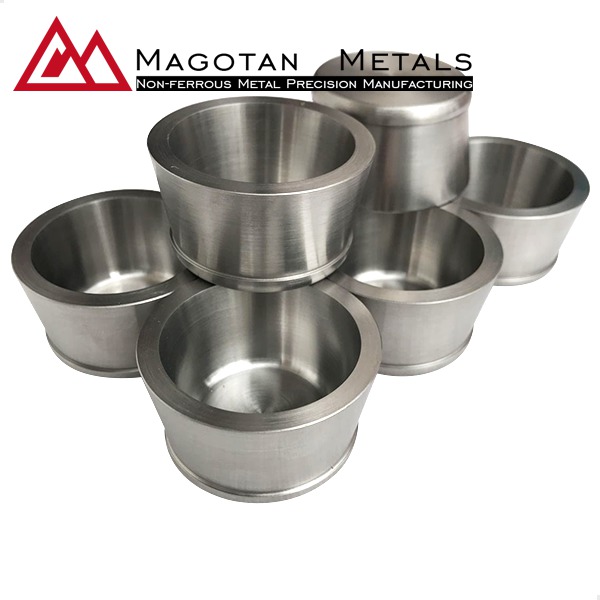
Steel & Alloy Production: Molybdenum electrodes, heating elements, and crucibles for electric arc furnaces and induction furnaces, used in melting high-grade steels, superalloys, and non-ferrous metals.
Glass Manufacturing: Molybdenum stirrers, rollers, and nozzles for float glass production, resisting high temperatures and molten glass corrosion.
Chemical & Petrochemical
Catalysis: Molybdenum-based catalysts (e.g., molybdenum disulfide) for hydrodesulfurization (HDS) in oil refining and chemical synthesis.
Corrosion-Resistant Equipment: Valves, pumps, and reactor liners for handling corrosive media (e.g., sulfuric acid, hydrochloric acid) and high-temperature reactions.
Medical & Biomedical
Medical Devices: Molybdenum alloy components for orthopedic implants (e.g., hip joints) and dental instruments, due to biocompatibility, high strength, and corrosion resistance.
Imaging Technology: Target materials for X-ray tubes, leveraging high melting point and X-ray emission efficiency.