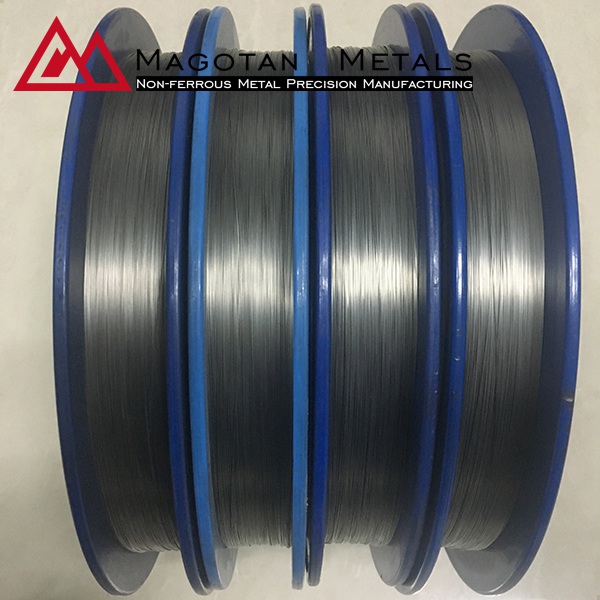
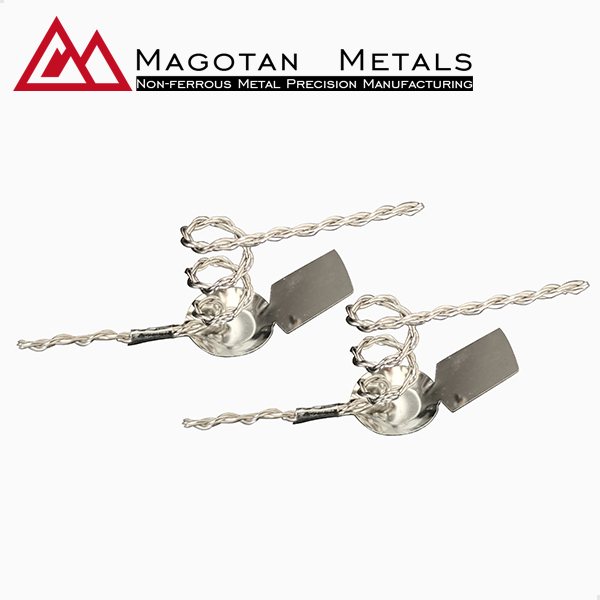
Tungsten, a refractory metal with exceptional physical and chemical properties, has become an indispensable material in high-performance industrial applications. Its discovery and isolation spanned centuries, involving observations from miners, mineralogists, and chemists across Europe and Asia. This article traces the historical evolution of tungsten’s discovery, elaborates on its core properties, and highlights its critical role in modern industries—especially in fields demanding extreme temperature resistance and high mechanical strength.
Historical Evolution of Tungsten Discovery and Isolation
The journey of tungsten from a mysterious ore interference to a purified metal spanned over two centuries, with key milestones achieved by researchers and observers across different regions. Each stage of discovery laid the foundation for understanding its unique properties and subsequent industrial utilization.
Early Observations: 17th-Century Mining Phenomena
The first recorded observations related to tungsten date back to the 17th century in Saxony, Germany. Miners in this region noticed that certain ores had a disruptive effect on the reduction process of cassiterite (tin oxide), the primary ore for tin extraction. These interfering ores led to the formation of excessive slag, reducing the efficiency of tin production. At the time, the miners did not recognize the presence of a new element; instead, they viewed these ores as undesirable impurities. This early observation, however, marked the first indirect encounter between humans and tungsten-bearing minerals.
Scientific Identification and Tungsten Isolation: 18th-Century Breakthroughs
The 18th century witnessed significant scientific progress in identifying and isolating tungsten, driven by the work of prominent European chemists and mineralogists:
• 1758: Axel Fredrik Cronstedt, a Swedish chemist and mineralogist, identified a heavy mineral from which he coined the name “tungsten”—derived from the Swedish words “tung” (heavy) and “sten” (stone). Cronstedt hypothesized that this mineral represented a new substance, though he did not successfully isolate the metal itself. The mineral he discovered was later identified as scheelite (calcium tungstate), a major tungsten-bearing ore.
• 1781: Carl Wilhelm Scheele, another Swedish chemist, made a critical advancement by extracting tungstic acid (H₂WO₄) from scheelite. Through chemical analysis, Scheele deduced that tungstic acid was a compound of an unknown metal and oxygen. He proposed that reducing tungstic acid could yield the pure form of this new metal, laying the theoretical groundwork for subsequent isolation efforts.
• 1783: Spanish brothers Juan José Elhuyar and Fausto Elhuyar, working independently, replicated Scheele’s work by extracting tungstic acid from another tungsten-bearing mineral—wolframite (iron-manganese tungstate). Later that year, they achieved a groundbreaking milestone: using carbon as a reducing agent, they successfully reduced tungsten trioxide (WO₃) to obtain tungsten powder. This experiment marked the first successful isolation of elemental tungsten by humans, validating Scheele’s hypothesis and opening the door to further research on the metal’s properties.
Tungsten Discovery in China: Early 20th Century
In China, the discovery and naming of tungsten ore are credited to Li Guochin. In 1911, Li discovered black mineral sand deposits in the Wuling Mountains, located at the border of Yizhang, Rucheng, and Zixing counties in Hunan Province. Through systematic investigation and analysis, he identified this mineral as tungsten ore and officially named it “tungsten” (Chinese: 钨). This discovery was pivotal for China’s tungsten industry, as Hunan Province later became one of the world’s major tungsten-producing regions. China’s abundant tungsten reserves have since positioned it as a key player in the global tungsten supply chain.
Core Properties of Tungsten: Foundations for Industrial Applications
Tungsten’s unique set of physical and chemical properties, rooted in its atomic structure (atomic number 74, electron configuration [Xe] 4f¹⁴ 5d⁴ 6s²), make it irreplaceable in numerous high-demand applications. Its status as a refractory metal—defined by extremely high melting points and resistance to heat and wear—is particularly noteworthy.
Extreme Temperature Resistance
Tungsten boasts the highest melting point (3,422°C) and boiling point (5,930°C) among all metallic elements. This exceptional thermal stability allows tungsten to retain its structural integrity in environments where most other metals would melt or degrade, such as in high-temperature furnaces, rocket nozzles, and turbine engines. This property was first hinted at during its isolation, as the Elhuyar brothers required intense heat to reduce tungsten trioxide—far higher than that needed for common metals like iron or copper.
High Density and Mechanical Strength
With a density of 19.3 g/cm³ (nearly twice that of lead), tungsten is one of the densest metals. Combined with its high tensile strength (even at elevated temperatures), this density makes tungsten ideal for applications requiring weight concentration or structural rigidity, such as counterweights, radiation shielding, and high-performance mechanical components. Unlike many metals that lose strength at high temperatures, tungsten maintains significant hardness and tensile strength up to 1,650°C.
Chemical Inertness and Corrosion Resistance
Tungsten exhibits high chemical stability, resisting corrosion by most acids (except hydrofluoric acid and concentrated nitric acid) and alkalis at room temperature. It also does not oxidize easily in air below 400°C, further enhancing its durability in harsh environments. This corrosion resistance, coupled with its biocompatibility, has expanded its use in biomedical applications such as surgical instruments and implant components.
Industrial Significance: From Early Utilization to Modern Critical Material
Since its isolation in 1783, tungsten has evolved from a laboratory curiosity to a critical material supporting global industries. Its properties align with the needs of emerging technologies, making it a cornerstone of modern manufacturing, aerospace, electronics, and energy sectors.
Early Industrial Applications
The first industrial use of tungsten dates back to the late 19th century, when it was incorporated into incandescent light bulb filaments. Prior to tungsten, filaments were made from carbon or platinum, which had shorter lifespans and lower efficiency. Tungsten’s high melting point and tensile strength made it the ideal filament material, revolutionizing the lighting industry. By the early 20th century, tungsten alloys (e.g., tungsten-steel) were developed for cutting tools, leveraging the metal’s hardness to improve machining efficiency for tough materials like steel.
Modern High-Tech Applications
In contemporary industries, tungsten’s role has expanded to even more demanding applications:
• Aerospace and Defense: Tungsten is used in rocket engine nozzles, turbine blades, and missile components, where it withstands extreme temperatures and mechanical stress. Its density also makes it suitable for balance weights in aircraft and armor-piercing projectiles.
• Electronics and Semiconductors: Tungsten is a key material for semiconductor manufacturing, used in vias (interconnects) and gate electrodes due to its high conductivity, thermal stability, and compatibility with silicon-based technologies. It is also used in vacuum tubes and X-ray tubes.
• Manufacturing and Tooling: Tungsten carbide (WC), a composite of tungsten and carbon, is one of the hardest known materials. It is widely used in cutting tools, drills, dies, and wear-resistant components, enabling high-speed machining of metals and composites.
• Energy and Renewable Resources: Tungsten is used in nuclear power plants for radiation shielding and in wind turbine components (e.g., gearbox parts) due to its durability and resistance to fatigue. It also plays a role in hydrogen fuel cells as a catalyst support.
Global Supply Chain and Strategic Importance
China dominates the global tungsten supply, accounting for over 80% of global production, followed by Russia, Canada, and Australia. Due to its critical role in high-tech and defense applications, tungsten is classified as a strategic material by many countries. Ensuring a stable supply of tungsten has become a priority for industries reliant on its unique properties, driving research into alternative extraction methods and recycling technologies.
Conclusion
The discovery and isolation of tungsten represent a remarkable journey of scientific curiosity and innovation, from 17th-century miners’ observations in Germany to the Elhuyar brothers’ pioneering reduction experiment in 1783 and Li Guochin’s discovery in China. Tungsten’s exceptional thermal stability, mechanical strength, and chemical inertness have made it an indispensable material in modern industry, supporting advancements in aerospace, electronics, manufacturing, and energy. As technology continues to evolve, the strategic importance of tungsten is set to grow, underscoring the value of its historical discovery and ongoing research into its applications and supply chain sustainability.