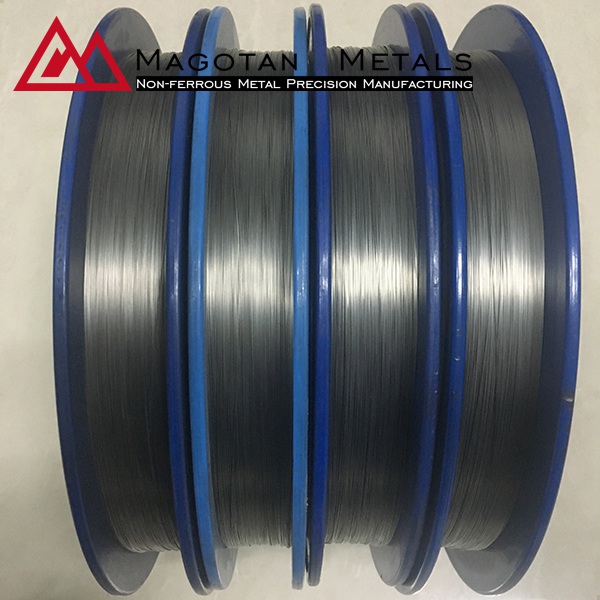
Tungsten filaments are critical components in various industrial and consumer applications, leveraging the unique physical properties of tungsten—such as its ultra-high melting point, excellent thermal conductivity, and stable electrical resistance. As a key material in the field of thermal radiation and electrical heating, tungsten filaments play an irreplaceable role in converting electrical energy into thermal energy and light energy.
Core Functions of Tungsten Filaments
The fundamental function of tungsten filaments is based on the Joule heating effect and thermal radiation principle. When an electric current passes through the tungsten filament, the resistance of the filament converts electrical energy into thermal energy, causing the filament to heat up rapidly. When the temperature reaches a certain threshold, the filament emits visible light or infrared radiation. The specific functions can be divided into the following two core aspects:
Electrical-to-Thermal Energy Conversion
Tungsten has an extremely high melting point (3422°C), which is significantly higher than other common metal materials (e.g., iron: 1538°C, nickel: 1455°C). This characteristic enables tungsten filaments to withstand extremely high temperatures (up to 2500-3000°C in practical applications) without melting or deforming. When energized, the resistance of the tungsten filament generates a large amount of heat through the Joule effect, achieving efficient conversion of electrical energy to thermal energy. This function is the basis for all applications of tungsten filaments, whether for lighting or heating.
Thermal Radiation (Light Emission/Infrared Radiation)
When the temperature of the tungsten filament rises to above 1000°C, it begins to emit thermal radiation. As the temperature increases, the radiation spectrum shifts from infrared to visible light. At temperatures around 2700K, the filament emits a warm white light similar to sunlight, which is the principle of incandescent lighting. In addition, when operating at lower temperatures (800-1500°C), tungsten filaments mainly emit infrared radiation, which can be used for infrared heating and sensing applications. The stability of tungsten’s chemical properties at high temperatures ensures that the radiation performance of the filament remains consistent during long-term operation.
Typical Applications of Tungsten Filaments
Benefiting from their excellent high-temperature resistance and efficient energy conversion performance, tungsten filaments are widely used in lighting, industrial heating, electronic components, and other fields. The following are the main application scenarios and their technical characteristics:
Lighting Industry
The lighting industry is the traditional and most mature application field of tungsten filaments. Although LED lighting has gradually become mainstream, tungsten filament incandescent lamps still occupy a place in specific scenarios due to their unique light quality (continuous spectrum, warm color temperature) and low cost.
In incandescent lamps, the tungsten filament is sealed in a glass bulb filled with inert gas (e.g., argon, nitrogen) or vacuum to prevent oxidation and sublimation of the filament at high temperatures. To extend the service life, modern incandescent lamps often use doped tungsten filaments (e.g., doped with thorium, lanthanum) to improve the recrystallization temperature of tungsten and reduce filament evaporation. In addition, tungsten filaments are also used in halogen lamps—a type of high-efficiency incandescent lamp. The halogen cycle in the lamp bulb can re-deposit the sublimated tungsten atoms back onto the filament, significantly extending the service life and improving luminous efficiency.
Furthermore, tungsten filaments are used in special lighting equipment, such as stage lighting, automotive headlamps (traditional halogen headlights), and infrared heating lamps for medical and agricultural applications. These scenarios require stable light output and high-temperature resistance, which tungsten filaments can fully satisfy.
Industrial Heating Equipment
In industrial production, tungsten filaments are used as heating elements in high-temperature heating equipment due to their ability to withstand ultra-high temperatures. Typical applications include vacuum heat treatment furnaces, sintering furnaces, and crystal growth equipment. In vacuum environments, tungsten filaments can operate at temperatures above 2500°C, providing a stable high-temperature heat source for processes such as metal heat treatment, ceramic sintering, and semiconductor material growth.
In addition, tungsten filament heating elements are used in infrared heating equipment for industrial drying, plastic molding, and food processing. The infrared radiation emitted by tungsten filaments can be absorbed by materials, achieving rapid and uniform heating, which improves production efficiency and product quality. Compared with other heating elements (e.g., resistance wires, ceramic heaters), tungsten filament heating elements have the advantages of fast heating speed, high temperature control accuracy, and long service life.
Electronic and Semiconductor Industry
In the electronic and semiconductor industry, tungsten filaments are used as core components in electron guns, which are key parts of electron microscopes, cathode ray tubes (CRTs), and semiconductor processing equipment (e.g., ion implanters, electron beam lithography machines). When heated, the tungsten filament emits electrons through thermionic emission, which are then accelerated and focused to form an electron beam. The high melting point and stable emission performance of tungsten filaments ensure the reliability and precision of electron beam equipment.
In addition, tungsten filaments are used in vacuum tubes (e.g., triodes, tetrodes) for high-frequency communication equipment. Although vacuum tubes have been largely replaced by semiconductor devices, they are still used in special fields such as aerospace, military communications, and high-power radio transmitters due to their high power handling capacity and resistance to harsh environments. The tungsten filament in the vacuum tube acts as a cathode, providing a stable electron source for the tube’s operation.
Other Special Applications
Tungsten filaments also have special applications in medical and scientific research fields. For example, in medical devices such as infrared thermometers and laser therapeutic instruments, tungsten filaments are used as heating elements or light sources to provide stable thermal radiation or laser pumping energy. In scientific research, tungsten filaments are used in high-temperature physics experiments, material science research, and space exploration equipment, where they need to withstand extreme temperatures and harsh environments.
Development Trends and Technical Improvements of Tungsten Filaments
With the continuous development of industrial technology, the performance requirements for tungsten filaments are constantly improving. Currently, the main research directions include improving the high-temperature resistance and service life of tungsten filaments through material doping and surface modification, developing ultra-fine tungsten filaments for microelectronic devices, and exploring new application scenarios such as quantum computing and nuclear fusion equipment.
In addition, with the increasing emphasis on energy conservation and environmental protection, the development of high-efficiency tungsten filament products (e.g., high-luminous-efficiency halogen lamps, energy-saving incandescent lamps) is also a key trend. By optimizing the structure of tungsten filaments and improving the gas filling technology in the bulb, the energy efficiency of tungsten filament lighting products can be significantly improved, reducing energy consumption and environmental impact.
Conclusion
As a key material with excellent high-temperature resistance and energy conversion performance, tungsten filaments play a vital role in lighting, industrial heating, electronic semiconductors, and other fields. Their core functions of electrical-to-thermal energy conversion and thermal radiation are the basis for various applications. With the continuous advancement of technology, the performance of tungsten filaments will be further improved, and their application scenarios will be continuously expanded, continuing to contribute to the development of various industries.