Refractory metals, with excellent heat resistance, high melting points, and superior mechanical properties, are core materials in high-temperature industries such as aerospace, metallurgy, electronics, and nuclear energy. Service temperature directly determines their performance, safety, and service life. This article concisely sorts out service temperature recommendations, core characteristics, and application cases of mainstream refractory metals and alloys, providing authoritative references for industry material selection.
Core Refractory Metals & Alloys: Service Temperature Guidelines
Refractory metals mainly include tungsten, molybdenum, tantalum, niobium, and their alloys. Due to differences in crystal structure and chemical composition, each has unique temperature adaptability. Below is a concise explanation of their core service temperatures and application characteristics.
Tungsten (W): 1800–2500°C, Versatile Ultra-High-Temperature Option
Tungsten has a melting point of 3422°C and a recommended service temperature range of 1800–2500°C, with excellent high-temperature structural stability and heat resistance. Note: It is prone to oxidation in air above 500°C, requiring protective atmospheres or anti-oxidation coatings; its high density and excellent thermal conductivity make it suitable for extreme high-temperature scenarios.
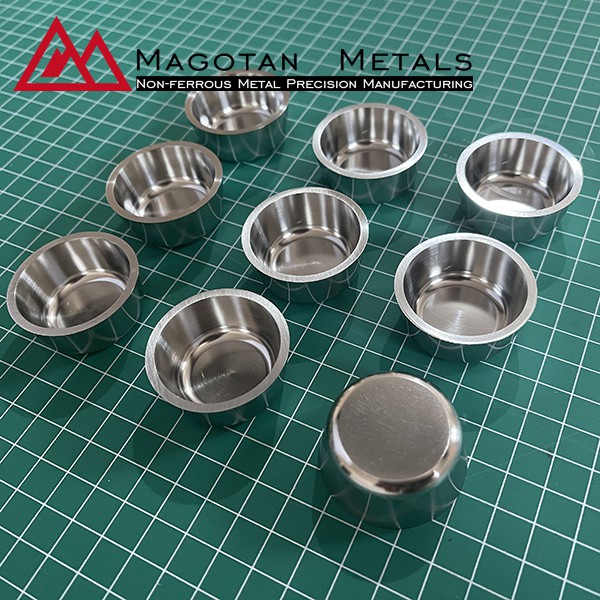
Typical Applications: Core components of vacuum induction melting furnaces (melting superalloys at 1950°C, stable service for over 1200 hours); tungsten throat liners for rocket engines (withstanding 2300–2400°C combustion environment); tungsten crucibles for semiconductor single crystal furnaces (achieving contamination-free melting of high-purity silicon at 1850°C).
TZM Alloy (Titanium-Zirconium-Molybdenum): 1800–2000°C, High-Strength Molybdenum-Based Substitute
TZM alloy (titanium-zirconium-molybdenum alloy) is a cost-effective alternative to tungsten in the 1800–2000°C range. Its high-temperature creep resistance is 2–3 times that of pure molybdenum, with lower density and better machinability, filling the medium-to-high temperature application gap between tungsten and conventional molybdenum alloys.
Typical Applications: Heating element supports for semiconductor high-temperature annealing furnaces (continuous service at 1900°C for over 600 hours without deformation, 15% increase in chip yield); electrodes for solar polysilicon reduction furnaces (withstanding 1850°C corrosive environment, 50% extension in service life).
Material Selection Comparison: TZM Alloy vs. Tungsten (1800–2000°C)
In the 1800–2000°C range, the core differences in material selection between TZM alloy and tungsten are as follows:
-
Cost Efficiency: TZM alloy has lower material and processing costs, suitable for mass-produced, complex structural parts;
-
Density & Weight: TZM’s density (10.2g/cm³) is only half that of tungsten, suitable for lightweight requirements such as aerospace;
-
Machinability: TZM has good room-temperature ductility, easy to turn and weld; tungsten is brittle and requires special processes;
-
Extreme Temperature Margin: Tungsten is selected for short-term scenarios exceeding 2000°C; TZM is prone to creep.
Molybdenum-Lanthanum Alloy (Mo-La): 1300–1800°C, Optimal Medium-High Temperature Material
Molybdenum-lanthanum alloy is the preferred material for the 1300–1800°C range. Doping with lanthanum oxide optimizes the grain structure, improves high-temperature creep resistance, reduces high-temperature brittleness of pure molybdenum, and has better oxidation resistance. It is suitable for medium-to-high temperature corrosive/oxidizing environments and has good machinability.
Typical Applications: Heating electrodes for float glass production lines (service at 1600°C for over 8000 hours, 40% reduction in replacement frequency); components for high-temperature sintering furnaces of electronic ceramics (stable operation at 1700°C).
Pure Molybdenum (Mo): 1000–1300°C, Cost-Effective Medium-Temperature Workhorse
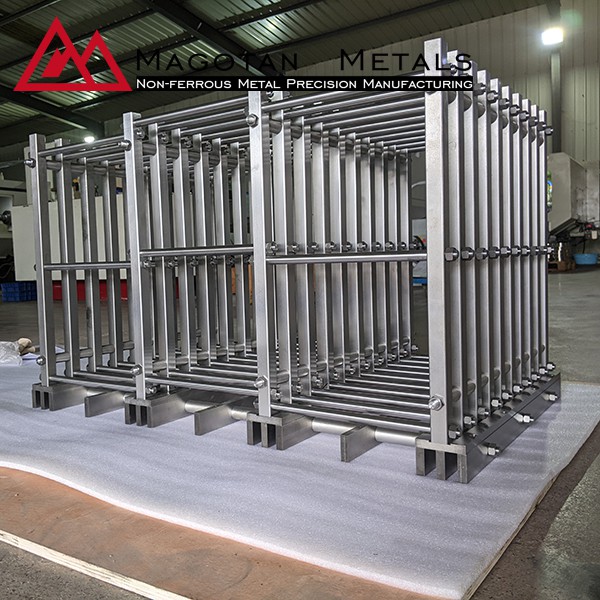
Pure molybdenum has a melting point of 2623°C and the best cost-effectiveness in the 1000–1300°C range. It has excellent thermal and electrical conductivity and good machinability, but its high-temperature strength drops sharply above 1300°C and is prone to oxidation in air above 600°C, requiring inert gas protection.
Typical Applications: Molybdenum baskets for heat treatment furnaces (annealing stainless steel at 1200°C, service for over 2000 hours); lead frames for high-power vacuum tubes.
Supplementary Refractory Metals: Extended Temperature Range Options
Other refractory metals are indispensable in specific high-temperature scenarios, with core information as follows:
-
Tantalum (Ta): Serves at 1500–1800°C in vacuum/inert gas environments, with extremely strong acid corrosion resistance, suitable for liners of hydrofluoric acid production equipment (stable operation at 1600°C);
-
Niobium (Nb): Applicable at 1200–1500°C, with low density and excellent superconductivity, used for turbine blades of aircraft engines (withstanding 1400°C high-temperature gas flow);
-
Tungsten-Hafnium-Carbon Alloy (W-Hf-C): Adaptable to ultra-high temperatures of 2500–2800°C, used for thermal protection of hypersonic vehicles and nuclear fusion reactors.
Key Factors Affecting the Service Temperature of Refractory Metals
Standard service temperatures are for reference only; the following key influencing factors must be considered in practical applications:
Atmospheric Environment
Most refractory metals are prone to oxidation at high temperatures (molybdenum oxidation accelerates in air at 600°C, tungsten at 800°C). Protective measures or alloy modification are required in oxidizing environments.
Load-Bearing Conditions
High loads intensify creep and reduce service temperature (e.g., pure molybdenum can be used at 1300°C under no load, but drops to 1100°C under high pressure).
Service Duration
Short-term peak temperatures can be 100–300°C higher than continuous service temperatures (e.g., tungsten can withstand 2800°C for short periods, but needs to be below 2500°C for long-term stability).
Conclusion
Refractory metals are indispensable materials in high-temperature industries. Accurately matching materials with service temperatures is key to optimizing performance, safety, and cost: tungsten and TZM alloy dominate the 1800–2000°C range (tungsten extends to 2500°C), molybdenum-lanthanum alloy is suitable for 1300–1800°C, and pure molybdenum supports 1000–1300°C. Optimal material selection can be achieved by integrating material characteristics, working conditions (atmosphere, load), and service duration. Future upgrades in alloy technology will further expand the boundaries of high-temperature engineering, supporting innovation in aerospace, electronics, and other fields.