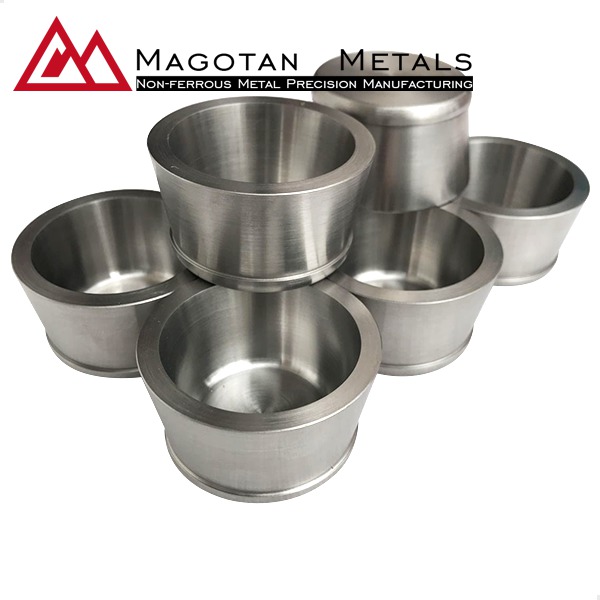
Amid the global wave of electrification and industrial upgrading, power semiconductors have become the core cornerstone of modern electronic systems, fueling soaring demand in automotive, industrial, and energy storage sectors. Refractory metals like molybdenum (Mo) and tungsten (W)—celebrated for their exceptional high-temperature resistance, corrosion resistance, and mechanical stability—have emerged as indispensable components in high-reliability power semiconductors. This article centers on the growing demand for automotive semiconductors and industrial power devices, explores high-frequency application scenarios of molybdenum and tungsten components, and analyzes their performance optimization pathways to meet the stringent reliability requirements of power semiconductors.
Application Scenarios of Molybdenum & Tungsten Components in Power Semiconductors
Molybdenum and tungsten, boasting melting points of 2623°C and 3422°C respectively, outperform conventional metals in extreme operating environments. Their unique material properties render these refractory metal components ideal for high-temperature, high-voltage, and corrosion-prone scenarios in power semiconductors—particularly in the fast-growing automotive and industrial sectors.
Automotive Semiconductor Sector: Empowering Electrification Transformation
The accelerated electrification of automobiles has pushed the demand for automotive semiconductors to new heights, with power modules (such as IGBT, SiC MOSFET) being the core of new energy vehicle (NEV) powertrains, on-board chargers (OBC), and battery management systems (BMS). These modules operate under high current, high voltage, and high frequency for long periods, generating substantial heat that directly affects device reliability and service life. Molybdenum and tungsten components play a critical role in thermal management and structural support here.
In powertrain inverters, molybdenum alloy heat sinks are widely used due to their excellent thermal conductivity (138 W/(m·K) for molybdenum) and thermal expansion coefficient matching that of semiconductor chips (such as Si and SiC). Compared with aluminum and copper, molybdenum heat sinks can efficiently dissipate heat generated by high-frequency switching of power devices, avoiding thermal runaway and ensuring stable operation of the inverter at temperatures above 200°C. Tungsten alloy structural parts, on the other hand, are applied in high-voltage terminal connectors of power modules. Their high mechanical strength and corrosion resistance can withstand the erosion of high-voltage electric fields and chemical media in the working environment, reducing contact resistance and preventing electrical breakdown, thus improving the safety of the entire power system.
In on-board chargers, molybdenum thin films are used as electrode materials for capacitors and resistors. The low resistivity and high temperature stability of molybdenum enable these passive components to adapt to the high-frequency charging and discharging cycles of OBC, ensuring accurate energy conversion and long-term reliability. Additionally, tungsten-molybdenum alloy brackets are employed to fix semiconductor chips in BMS, as they can resist the vibration and temperature fluctuations of automotive operation, maintaining the structural integrity of the chip assembly.
Industrial Power Device Sector: Supporting High-Power Operation
Industrial power devices, including inverters, rectifiers, and frequency converters, are widely used in manufacturing, power grids, and renewable energy (solar, wind) generation. These devices often work in harsh industrial environments with high temperature, humidity, and chemical corrosion, requiring components to have ultra-high reliability and durability. Molybdenum and tungsten components demonstrate outstanding performance in such scenarios.
In industrial inverters for motor speed regulation, tungsten carbide-reinforced molybdenum components are used as switching contacts. The combination of molybdenum’s high conductivity and tungsten carbide’s wear resistance and corrosion resistance enables the contacts to withstand frequent high-current switching operations, reducing arc erosion and extending the service life of the inverter by more than 50% compared with traditional copper contacts. In high-voltage rectifiers for power grids, molybdenum electrodes are utilized in plasma etching processes for semiconductor wafers. Molybdenum’s resistance to plasma corrosion and stable electrical properties ensure uniform etching precision, laying the foundation for the production of high-performance power devices.
In renewable energy generation systems, such as wind turbine converters and solar inverter stations, molybdenum and tungsten components are key to adapting to outdoor harsh environments. Tungsten alloy heat pipes are used in the thermal management system of solar inverters, efficiently transferring heat in high-temperature outdoor conditions to prevent device overheating. Molybdenum alloy enclosures, meanwhile, protect internal power components from corrosion by rainwater, dust, and harmful gases, ensuring the stable operation of renewable energy power generation systems for a long time.
Performance Optimization of Molybdenum & Tungsten Components for High Reliability
To fully satisfy the high reliability demands of power semiconductors—including long service life, stable performance under extreme conditions, and compatibility with high-frequency operation—manufacturers have implemented targeted performance optimization on molybdenum and tungsten components via material modification, process upgrading, and structural design, enhancing their适配性 for power semiconductor applications.
Material Composition Optimization: Balancing Comprehensive Properties
Pure molybdenum and tungsten have certain limitations, such as poor ductility at room temperature and low oxidation resistance. Through alloying modification, their comprehensive properties are significantly improved. For example, adding small amounts of rhenium (Re) to molybdenum (forming Mo-Re alloy) can increase the ductility and creep resistance of molybdenum, making it suitable for power module components that work under cyclic temperature changes. The Mo-Re alloy heat sinks used in automotive inverters can withstand repeated thermal expansion and contraction without cracking, improving the long-term reliability of the power module.
Tungsten-copper (W-Cu) composite materials, formed by combining tungsten’s high temperature resistance and copper’s high thermal conductivity, are widely used in thermal management components of power devices. By adjusting the proportion of tungsten and copper (usually 70%-90% tungsten), the thermal expansion coefficient of the composite material can be precisely matched with that of SiC chips, reducing thermal stress between the chip and the heat sink, and avoiding chip damage caused by thermal fatigue. Additionally, adding trace amounts of titanium (Ti) and zirconium (Zr) to molybdenum alloys can form stable carbides, enhancing the corrosion resistance of the material to acidic and alkaline media in industrial environments.
Precision Machining Process Upgrade: Ensuring Dimensional Accuracy
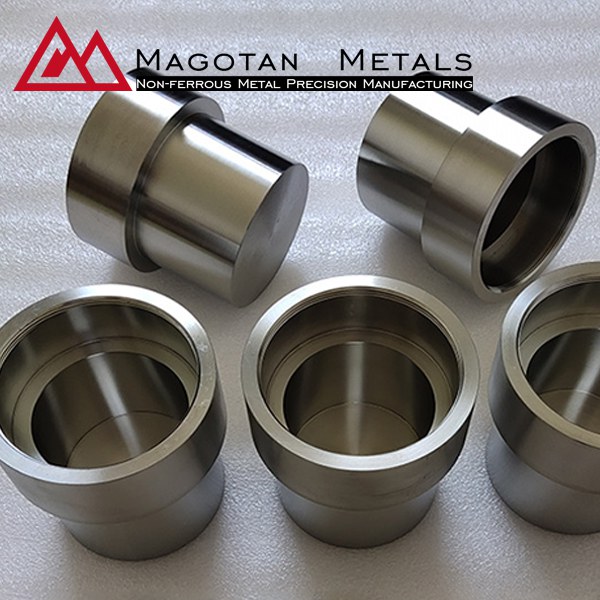
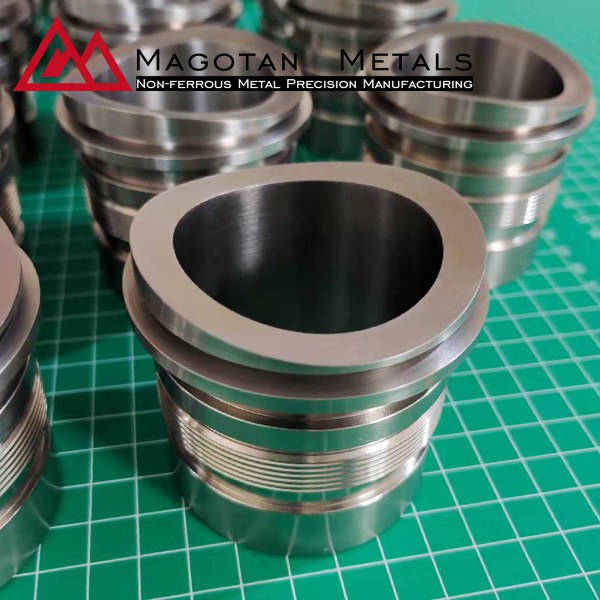
Power semiconductor components have strict requirements on dimensional accuracy and surface quality, as slight deviations may lead to increased contact resistance, poor heat dissipation, and even device failure. Advanced precision machining technologies are adopted to optimize the processing of molybdenum and tungsten components. For example, using computer numerical control (CNC) turning and milling machines with high precision (error within ±0.001 mm) to process molybdenum heat sink surfaces ensures a flatness that meets the bonding requirements of semiconductor chips, reducing thermal resistance at the interface.
For molybdenum thin films used in passive components, physical vapor deposition (PVD) technology is optimized to control the film thickness uniformity and grain size. By adjusting the deposition temperature, pressure, and power, the resistivity of the molybdenum film is stabilized at a low level, ensuring the stable performance of capacitors and resistors under high-frequency operation. Additionally, precision grinding and polishing processes are applied to tungsten alloy structural parts, improving their surface roughness and reducing the risk of electric field concentration in high-voltage environments.
Surface Modification Technology: Enhancing Environmental Adaptability
Surface modification is an effective way to improve the oxidation resistance, corrosion resistance, and wear resistance of molybdenum and tungsten components. For example, applying a silicon nitride (Si₃N₄) coating on the surface of molybdenum heat sinks through chemical vapor deposition (CVD) technology forms a dense protective layer that prevents molybdenum from oxidizing at high temperatures (above 600°C), extending the service life of the heat sink in power modules.
For tungsten electrode contacts in industrial power devices, a chromium (Cr) plating layer is applied to enhance their corrosion resistance and wear resistance, reducing arc erosion during switching operations. Moreover, diamond-like carbon (DLC) coatings are used on the surface of molybdenum alloy brackets, improving their lubricity and reducing friction damage caused by vibration in automotive and industrial environments. These surface modification technologies not only improve the environmental adaptability of molybdenum and tungsten components but also further enhance the overall reliability of power semiconductors.
Driven by automotive electrification and industrial upgrading, the rapid rise of power semiconductors has spurred massive market demand for high-reliability components. Molybdenum and tungsten components, with their superior high-temperature resistance, corrosion resistance, and mechanical stability, have become irreplaceable in high-frequency application scenarios of automotive semiconductors and industrial power devices. Through continuous optimization of material composition, precision machining processes, and surface modification technologies, these refractory metal components are better adapting to the stringent reliability requirements of power semiconductors, providing robust support for the industry’s development. In the future, as wide-bandgap semiconductors (such as SiC, GaN) advance toward higher power density and frequency, the application scenarios and performance optimization potential of molybdenum and tungsten components will expand further.